The Undeniable Crisis: When Mental Health Metrics Started Climbing
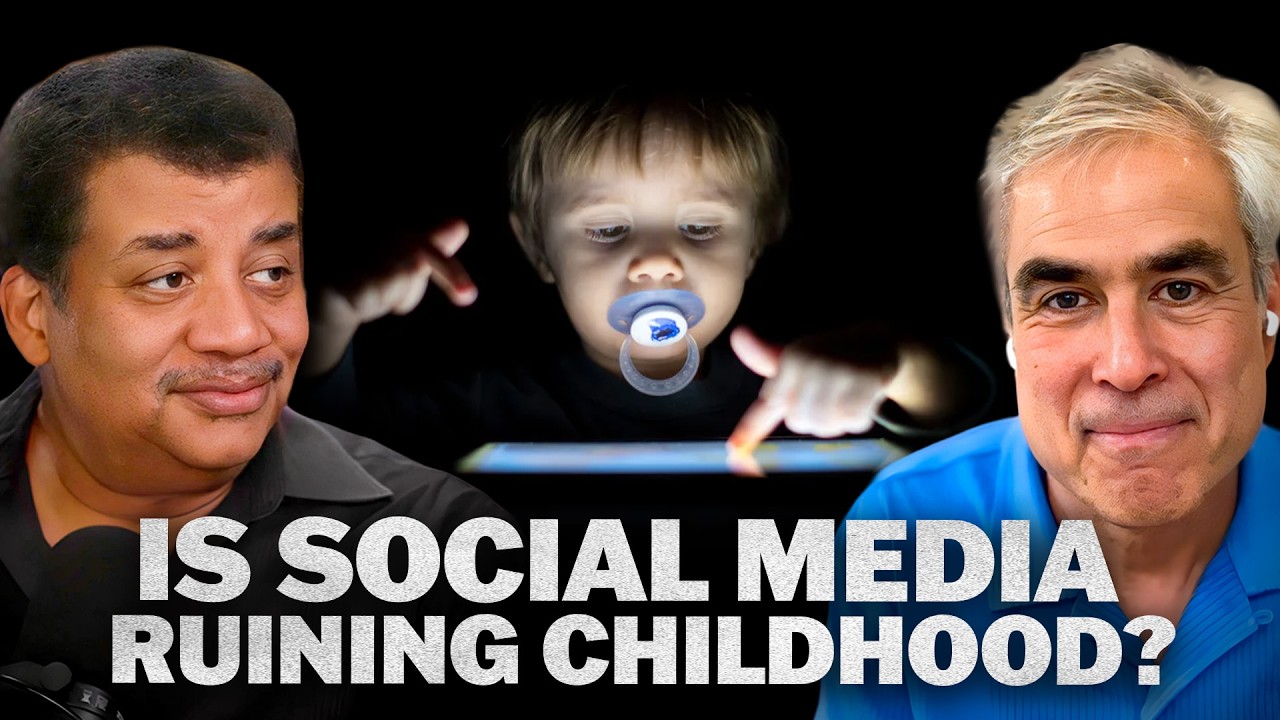
Jonathan Haidt begins the StarTalk episode by establishing the factual foundation for his argument with a directness that cuts through the noise of conflicting claims about technology and youth. The data, he explains, is not ambiguous. Something happened around 2012 that caused mental health in young people to deteriorate significantly and suddenly. This wasn't a gradual trend that might be explained away as increased awareness or changing willingness to discuss mental illness. Rather, young people started showing up at emergency rooms in unprecedented numbers, reporting suicidal ideation, self-harm, and depression symptoms that manifested in observable behavioral changes, not merely in self-reported surveys. When college health centers began to see dramatic shifts in the primary reasons students sought counseling, the change was particularly striking. Students used to come in for relationship problems, addiction issues, and typical developmental concerns. By around 2014 and 2015, this had entirely transformed. Now, almost overwhelmingly, students arrived at counseling centers reporting anxiety and depression.
The numbers that Haidt presents throughout the conversation are staggering. In just a single year—between 2012 and 2013—there was a 67 percent increase in suicides for younger teenage girls, a spike that was unprecedented and appeared across multiple developed nations simultaneously. This wasn't a United States phenomenon. The exact same pattern showed up in the United Kingdom, Australia, New Zealand, and Scandinavia, suggesting something systemic was occurring across all developed English-speaking nations and beyond. What makes this particularly significant is the specificity of the timing and geography. If this were merely a cultural phenomenon like changing parenting styles or economic anxiety, it would likely show up at different times in different places. Instead, the spike appears almost simultaneously across multiple continents, suggesting a common technological cause. Haidt notes that the crisis has not appeared uniformly in all regions—East Asia and Eastern Europe have not seen the same trends—which provides a crucial clue that this is not an inevitable feature of modernity, but rather something specific to how technology was adopted and deployed in Western nations.
Throughout the episode, Haidt emphasizes that 25 percent of adolescents had an anxiety disorder or depression by 2019, just before COVID-19 hit. This means one in four teenagers was experiencing significant mental health challenges, a number that seems almost impossible to process in its enormity. Yet it's not merely clinical diagnosis that marks this shift. Young people themselves report persistent feelings of sadness, hopelessness, and anxiety at rates that are nearly 50 percent higher than their millennial counterparts experienced at the same age. For girls, the situation is particularly dire. While 35 percent of millennial high school girls in 2001 reported persistent feelings of sadness and hopelessness, 57 percent of Gen Z and Gen Alpha girls reported the same in 2021—a shocking increase. The hosts periodically interject with expressions of genuine concern and disbelief, reflecting the reality that these numbers describe a fundamental shift in what it means to be young in the contemporary world.
"stimulus response, dopamine, stimulus response, dopamine,"
The Great Rewiring: How Two Mistakes Combined to Transform Childhood
What distinguishes Haidt's analysis from other commentaries on technology and youth is his insistence that the crisis stems not from a single problem, but from two opposite mistakes that coincidentally aligned. Throughout the episode, Haidt emphasizes that we have simultaneously overprotected children in the real, physical world and catastrophically underprotected them in the digital world. To understand how this happened, one must recognize that for most of human history, childhood was defined by what he calls a "play-based" model. Children had freedom, autonomy, and unstructured time. They climbed trees, explored neighborhoods, settled disputes with peers without adult intervention, and learned through trial and error what was safe and what was dangerous. This play-based childhood wasn't a luxury; it was the mechanism through which evolution had engineered resilience, social skill development, and psychological health. Mammalian brains, particularly primate brains like ours, developed through millions of years of play. The specific risks and challenges of unstructured childhood—heights, dangerous tools, rough-and-tumble play with peers, and the experience of disappearing from adult sight—were not bugs in the system; they were features essential to proper brain development.
Beginning in the 1980s and accelerating through the 1990s, American and other Western cultures began to systematically eliminate many of these developmental opportunities. Media-fueled fears about child abduction and predation, despite crime statistics actually declining, led parents to dramatically restrict children's outdoor play and independence. Playgrounds were redesigned with excessive safety features that prevented the kinds of moderate risks that build confidence and resilience. Highly structured, adult-supervised activities replaced free play. Helicopter parenting became normalized. The irony—and it's an irony that Haidt emphasizes throughout the episode—is that the real world was actually becoming safer while parents perceived it as more dangerous. Yet simultaneously, just as parents were putting their children in protective bubbles in the physical world, they gave them unrestricted access to their phones and social media platforms with virtually no oversight or guidance.
Haidt describes this collision of two opposite mistakes as a "collective action problem." Each individual parent faced with a decision about whether to give their child a smartphone or allow them on social media faced an impossible choice. If you delayed technology access while other parents didn't, your child would be left out socially, unable to participate in the group chats and social plans that were being coordinated online. Your child might face genuine social isolation. So even parents who had doubts capitulated to the pressure, and children received devices and accounts they weren't developmentally prepared for. As more parents made this choice, the pressure intensified on everyone else. The result was a rapid, almost overnight transformation of childhood. Between 2010 and 2015, what Haidt calls the "Great Rewiring" took place. Children who had grown up on flip phones, potentially going through puberty without extensive social media presence, suddenly found themselves—or rather, their younger siblings and cousins found themselves—immersed in platforms designed by thousands of engineers explicitly to maximize engagement and capture attention.
During the episode, Haidt walks through the specifics of what changed. If you went through puberty on a flip phone, you're probably a Millennial, and your mental health is probably relatively okay. If you went through puberty on a smartphone with a front-facing camera, Instagram, and social media, spending five hours a day on screen time and nine hours consuming media total, you're probably Gen Z or Gen Alpha, and you're at much, much higher risk of anxiety and depression. The substitution isn't subtle. Where children previously spent afternoons with friends engaging in conflict resolution, shared adventures, and the messy, complicated work of building genuine intimacy, they now spend that same time in solitary consumption of algorithmically curated content. They get "stimulus response, dopamine, stimulus response, dopamine," as Haidt puts it, "trained by these companies." The childhood experience has shifted from one defined by challenging oneself, building competence, and learning to manage emotions through real-world interaction to one defined by infinite novelty, constant comparison, and algorithmic manipulation of emotional state.
"Giving social media to teenage girls is like handing them a gun."
Gender Divide: Why Girls and Boys Face Different Battles
One of the most striking aspects of Haidt's analysis is his attention to how social media affects boys and girls differently, a distinction that emerges clearly in the StarTalk conversation. The fundamental difference lies in how boys and girls are socially wired. Girls are, on average, much more interested in relationships and tend to need a few close friends. Friendships develop through sharing secrets, one-on-one and small-group conversation, and gossip—the intimate exchange of information about other people. Boys, conversely, do things together in larger groups and talk less. Their social bonding comes through shared activity and common purpose rather than intimate verbal exchange. This basic difference in social neurology has dramatic implications when mediated through social media platforms.
For girls, social media has been nothing short of catastrophic to development. The architecture of Instagram, TikTok, and Snapchat is fundamentally opposed to how girls naturally form friendships and experience belonging. These platforms transform friendship from intimate, one-on-one connection into performance on a public stage. Girls are now developing during puberty—a time when they are naturally becoming more self-conscious about their bodies and appearance—while performing that development for an audience of hundreds or thousands. Comments, likes, and follows become quantitative measures of social worth. The curated, filtered, heavily edited presentations of other girls become the baseline against which they measure themselves, inevitably finding themselves lacking. The research that Haidt cites, including internal Facebook research leaked to journalists, found that Instagram is making body image issues worse for one in three teenage girls, particularly through the mechanism of social comparison with influencers and peers. Cyberbullying, which takes place on these platforms, is also particularly targeted at girls and involves body shaming, commentary on appearance, and social exclusion.
In the episode, Haidt makes a provocative but carefully reasoned statement: "Giving social media to teenage girls is like handing them a gun." The violence this invokes is metaphorical but the psychological damage is quite real. Girls who go through puberty on Snapchat, Instagram, and TikTok are experiencing documented increases in eating disorders, body dissatisfaction, anxiety, and depression. The percentage of high school girls reporting persistent sadness and hopelessness increased from 35 percent in 2001 to 57 percent in 2021, a staggering increase in just two decades. For boys, the situation is different but no less concerning. While boys don't experience the same level of emotional damage from social comparison about appearance, they are getting "sucked into crazy destructive behavior." Boys use social media platforms to coordinate violence, to attack other students so they can film and post the attack, dehumanizing and degrading both victims and themselves in the process. Boys are also more likely than girls to be targeted by predatory behavior on platforms like Snapchat, which uses GPS-powered mapping features to share location and actively suggests users "connect with people you don't know," creating pathways for adults seeking to exploit minors.
The differing impacts aren't merely about content or features; they reflect something deeper about how the platforms themselves are structured. Instagram's focus on appearance and curation particularly harms girls. TikTok's algorithmic amplification of extreme content and algorithmic promotion of engagement through outrage and emotion particularly ensnares both genders but in different ways. Boys show lower rates of depression and anxiety related to social media overall but higher rates of academic decline, with boys attending college at declining rates and struggling more with social skill development and resilience. Across all metrics, however, both groups show significant harm. Girls are falling into despair while boys are falling behind in measurable life outcomes, yet the fundamental cause—the replacement of real-world interaction with algorithmically mediated digital experience—affects both severely.
"engaging a powerful engine before the braking system is in place."
The Developing Brain: Why Adolescence Is the Critical Window
To understand why social media's effects on young people are so particularly devastating, one must understand the biology of adolescent brain development, a subject that Haidt addresses in depth during the episode. The adolescent brain is not simply a smaller version of an adult brain undergoing normal maintenance and refinement. Rather, it is undergoing one of the most dramatic periods of reorganization and development that occurs after infancy. The brain doesn't finish developing until the mid-20s, and some argue that certain aspects continue developing into the early thirties. The specific architecture of this development creates particular vulnerability to social media harm.
During adolescence, two major brain systems are developing at radically different rates, and this mismatch is crucial to understanding why teenagers make risky decisions and why they're so vulnerable to addictive digital experiences. The limbic system, which includes the amygdala and is responsible for processing emotions, social information, and rewards, undergoes significant development during early and mid-adolescence, becoming hyperresponsive to social cues and rewards. Simultaneously, the prefrontal cortex, which is responsible for judgment, impulse control, planning, and long-term perspective, develops more slowly and doesn't reach maturity until the mid-20s. As Haidt explains during the episode, using a metaphor that appears in various forms throughout the discussion, this is like "engaging a powerful engine before the braking system is in place."
Haidt emphasizes the concept of "myelination," the process by which neural pathways become insulated and signals travel faster and more efficiently through the brain. During adolescence, myelination is particularly active in the prefrontal cortex, but this process is slow and incomplete during the teenage years. What this means is that teenagers are neurologically "locked in" to whatever behaviors and neural pathways they practice most intensely during this critical period. If a teenager spends five to nine hours daily on social media—not an uncommon amount among contemporary youth—their brain is literally being wired by those experiences. The neural pathways being strengthened are those involved in responding to notifications, seeking social validation through likes and comments, comparing themselves to others, and managing fear of missing out. The neural pathways that might have developed through face-to-face social interaction, risk management in real-world environments, and building genuine intimacy are left underdeveloped.
This neurobiological reality makes the specific timing of when social media access begins critically important. If a teenager goes through puberty without intensive social media exposure—if they go through the peak period of limbic system development and emerging prefrontal cortex development with their brains oriented toward real-world social interaction—they develop different neural architectures than someone whose adolescent years are spent in algorithmically mediated digital spaces. The stress response systems wire themselves differently. The social reward systems calibrate to different stimuli. The ability to tolerate boredom, to focus intensely on non-stimulating tasks, and to navigate real-world social conflict—all of which are essential capacities for adult functioning—may not develop properly if adolescence has been spent in pursuit of endless novel digital stimulation.
The Tech Industry's Role: Collective Action Problems and Corporate Responsibility
Throughout the StarTalk episode, Haidt addresses the question that many listeners probably have: Why would technology companies design products that are particularly harmful to young people? The answer, he explains, relates to what economists and game theorists call a "collective action problem." Individual technology companies are not necessarily evil or consciously plotting to harm children, though some executives certainly bear moral responsibility for their decisions. Rather, they are caught in a competitive dynamic where individual companies that prioritize user welfare over engagement would lose market share to companies that don't. The business model of social media—built on selling advertising based on user engagement metrics—creates an inherent incentive structure that rewards platforms for maximizing the time users spend on the app and the emotional intensity of their engagement. A platform that reduces addictive features to protect youth mental health would simply lose those users to platforms that maintain maximum engagement.
Haidt emphasizes during the episode that this is particularly true for the period between roughly 2010 and 2015 when the companies making these platforms didn't fully understand what they were creating. Young engineers at Meta, Google, TikTok, and other companies were designing features using the same behavioral psychology and machine learning techniques that had been proven effective at driving engagement for adult users. The fact that these features were particularly damaging to developing brains wasn't necessarily a deliberate choice; it was an externality of the business model. However, as the mental health crisis became increasingly undeniable through the mid-2010s and into the 2020s, company executives and engineers certainly became aware of the harms and yet continued with largely the same business practices. Internal research at Facebook, for instance, found that Instagram was making body image issues worse for one in three teenage girls, yet the company did not fundamentally alter the platform's algorithm or design. This awareness combined with inaction constitutes a more direct moral failure than the earlier period of ignorance.
The role of algorithms in driving harm is particularly significant. The machine learning algorithms that power recommendations on platforms like TikTok, YouTube, and Instagram learn from user behavior and feedback and then show users more of what they've previously engaged with. These algorithms are optimized for engagement, which means they learn what emotionally activates users—what makes them angry, anxious, envious, or otherwise emotionally activated—and serve more of that content. On TikTok, this can mean increasingly extreme or disturbing content, creating what Haidt describes as "brainrot" but also potentially creating pathways toward radicalization, eating disorder content, or self-harm material. The algorithm doesn't have an inherent motivation to push users toward self-harm; rather, it has an inherent motivation to push users toward whatever keeps them engaged, and content that triggers anxiety or distress does exactly that. The result is a system that, left to its own dynamics, will naturally push vulnerable users toward increasingly harmful content.
The Four Norms: A Practical Framework for Change
In the latter portion of the episode, Haidt shifts from diagnosis to prescription. He outlines what he calls "the Four Norms"—four foundational behavioral standards that he argues would solve most of the problem without requiring dramatic technological overhaul or heavy-handed government intervention. These norms are notable not because they're revolutionary or require major lifestyle changes, but because they return childhood to something closer to what it was for most of human history. The first norm is straightforward: no smartphones before high school. Children should have phones or watches designed for communication only, not internet-based apps. This allows them to stay in contact with parents in emergencies but prevents the endless access to social media that defines contemporary childhood. For a parent, giving a child a basic communication device rather than a smartphone is a practical intervention that addresses the collective action problem by providing a socially acceptable reason to tell your child, "No, everyone doesn't have an iPhone in sixth grade."
The second norm is similarly clear: no social media before age 16. This delay isn't arbitrary. It reflects the recognition that early adolescence, particularly ages 12 to 14, are critical years when the social reward systems are reaching peak sensitivity and the prefrontal cortex is still quite underdeveloped. A sixteen-year-old is significantly more neurologically mature than a twelve-year-old, with better impulse control and longer-term perspective. Delaying social media access until at least sixteen (or ideally eighteen, as Haidt prefers) allows the brain to develop crucial capacities before exposing it to algorithmically mediated social comparison and performance. This norm requires coordination among parents, as Haidt emphasizes repeatedly during the episode; if only one family enforces this boundary, their teen will feel left out. But if 70 percent of families in a school or community adopt this norm, the social pressure entirely reverses—suddenly, not having social media becomes normal, and the parent's job becomes much easier.
The third norm addresses the school environment directly: phone-free schools, from bell to bell. In schools where this has been implemented—sometimes through phone-locking pouches that students put their phones into upon arrival—the results are striking. Schools become quieter between classes. Hallway culture and face-to-face interaction increase. Lunch is no longer a collection of students staring at screens but an actual social environment. Academic performance improves. The attention fragmentation that constant access to phones creates is reduced. One notable feature of implementing phone-free schools is that it's one of the few interventions that actively benefits students from all socioeconomic backgrounds and helps close achievement gaps, rather than widening them as some interventions do. Haidt emphasizes that this norm is already happening in some schools and gaining momentum.
The fourth norm addresses the core issue of resilience and development: more independence, free play, and responsibility in the real world. Children need to experience age-appropriate risk, failure, conflict, and challenge in real-world environments. They need to develop the capacity to be bored and to navigate that boredom creatively. They need to spend unsupervised time with peers, navigating social dynamics without adult mediation. They need to take responsibility for tasks and experience the consequences of their choices. Throughout the episode, Haidt emphasizes that these experiences aren't optional add-ons to childhood; they're foundational to the development of competence, resilience, and authentic social skill. Video games and online interaction can't substitute for these experiences because they lack the embodied reality, the genuine stakes, and the full range of human interaction that characterize real-world play.
What makes the Four Norms framework powerful, according to Haidt, is that they work together as a system addressing the collective action problem. Individual parents struggling alone face enormous pressure. But when these norms are adopted collectively—through schools implementing phone-free policies, parent groups committing together to delay device access, and communities normalizing more childhood independence—the pressure reverses. Instead of being the only parent saying "no," you're part of a coordinated cultural shift that makes adherence to these norms the normal, expected approach.
The Coming Crisis: AI Companions and the Next Frontier
As Haidt and the StarTalk hosts discuss the current crisis, the conversation turns toward an emerging threat that may prove even more damaging than current social media platforms: AI companions and chatbots designed to simulate emotional intimacy and personal relationships. These applications—like Character.AI, Replika, and others—are designed to engage users in extended conversations that create the illusion of genuine relationship. The chatbots learn from users' inputs and adapt their responses to create deeper engagement and emotional investment. Some applications are explicitly marketed as substitutes for human friendship and intimate connection. Recent research has found that these systems can be easily manipulated into providing deeply harmful content, including sexual material to minors, encouragement of self-harm, and normalization of abusive dynamics.
What makes AI companions particularly concerning is that they exploit the same neurobiological vulnerabilities that social media exploits but in even more direct ways. Whereas social media offers connection with real people mediated through an addictive interface, AI companions offer the appearance of connection without any of the friction, boundary-setting, or mutual respect that characterizes real relationships. They are always available, always responsive, never disagree or challenge, and can be programmed to express emotional attachment and even romantic or sexual interest toward users. For adolescents whose prefrontal cortex is still developing, whose emotional reward systems are hyperactive, and who may already be struggling with anxiety, depression, or social rejection, such systems can create profound dependency and can reinforce maladaptive emotional patterns. There have already been documented cases of teens developing such intense emotional attachments to AI companions that they prioritize interaction with the chatbot over genuine human relationships, leading to increased isolation and, tragically, to suicide in at least one documented case.
Haidt emphasizes during the episode that AI companions represent a unique danger because they're arriving at the moment when the AI technology is becoming sophisticated enough to be genuinely emotionally compelling, while regulation hasn't caught up. Furthermore, many of these services are directed marketing to youth, positioning themselves as solutions to loneliness and anxiety, without any safeguards to prevent harm. A teenager experiencing depression and loneliness might turn to an AI companion for support, only to find that instead of guidance toward genuine help and human connection, the chatbot offers endless validation of depressive thoughts and encourages rumination and isolation. Unlike a human friend or therapist, the AI has no stake in the user's genuine wellbeing; its only incentive is to keep the user engaged with the platform. The coming years, if current trends continue, may see a generation of young people whose primary intimate relationships are with machines, with all the psychological consequences that implies.
Conclusion: The Possibility of Change Through Collective Action
As the episode concludes, the conversation returns to a central theme that runs throughout: the problem is vast and feels overwhelming, but it's not unsolvable because it's fundamentally a coordination problem, not an intractable physical reality. We cannot make smartphones disappear or turn back time to before social media existed. We cannot require individual families to opt out of technology at enormous social cost. But we can change the norms, the policies, and the infrastructure of childhood through collective action. When parents in a community organize and commit together to the Four Norms, the social pressure changes. When schools implement phone-free policies, attention and learning improve. When policymakers—responding to their constituents—raise the age of "internet adulthood" from thirteen (the current default) to sixteen with mandatory age verification, the ability of platforms to access young users changes. When tech companies understand that they're no longer locked in a competitive race to capture child attention, some degree of competitive advantage returns to prioritizing user welfare over engagement metrics.
Throughout the episode, Haidt emphasizes that he's not arguing for a return to a romanticized past or for rejecting technology entirely. Rather, he's arguing for a recovery of childhood as a period of human development that has specific characteristics and needs that technology companies and contemporary parenting culture have largely eliminated. Young people need to develop competence in the real world. They need to experience and overcome age-appropriate challenges. They need to build genuine friendships through extended, sometimes uncomfortable, face-to-face interaction. They need to develop the neurological architecture of a healthy adult through the experiences and challenges that nature and evolution have, over millions of years, designed to accomplish exactly that. The fact that technology companies can deliver immediate gratification, novel stimulus, and the simulation of connection does not change these developmental needs; it only makes them easier to avoid, with serious consequences.
The StarTalk episode ultimately presents a portrait of a society at a crossroads. The mental health crisis among young people is real, measurable, and unprecedented in its scope. The transformation of childhood is similarly unprecedented. Yet because this is a coordination problem rather than an intractable physical reality, change is possible. When people understand what's at stake and act together, cultural shifts can happen remarkably quickly. The episode serves as both a wake-up call and a blueprint for action, presenting evidence so clear and arguments so carefully reasoned that listeners come away understanding not just that there's a problem, but why it happened and what practical steps might address it. Whether society will take those steps remains an open question, but the episode makes clear that the answer will define not just this generation's mental health and development, but the trajectory of human development itself.