Strategic Position
Greenland holds critical strategic value due to its Arctic location. The United States established a military air force base in Greenland through an agreement with Denmark, specifically designed to monitor potential threats crossing the North Pole toward Europe and North America. The episode discusses how Greenland's polar position makes it essential for radar systems and satellite surveillance, as all satellites pass over polar airspace.
"Greenland is mostly glacier. So, a Mercator projection, which so many of us grew up with with maps on our classroom walls."
Melting Ice and Climate Impact
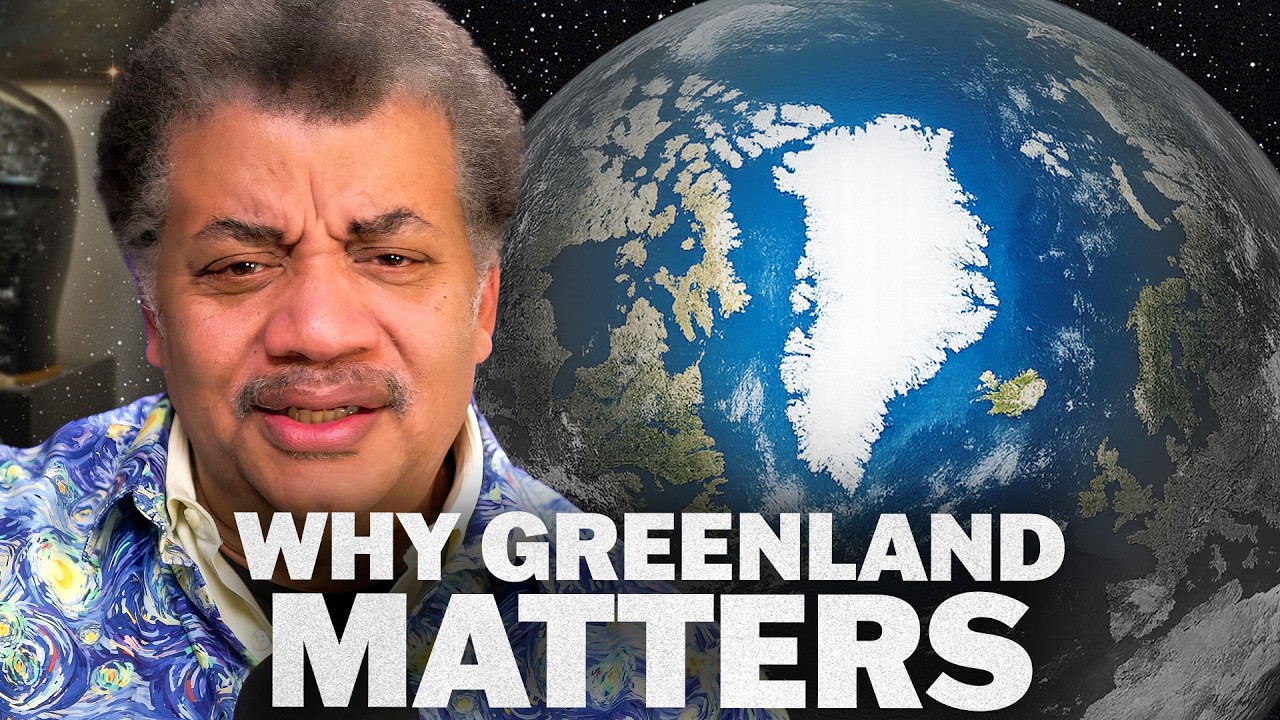
The episode examines how Greenland's glaciers are melting, which has consequences for global commerce and environmental concerns. Tyson notes the irony that Greenland is mostly glacier despite its name, and discusses how the Mercator projection distorts our perception of the island's actual size on maps.
"If you are near the pole, all the satellites are going to come over your airspace at all times."
Historical Military Incidents
A significant focus is the 1968 B-52 bomber crash in Greenland carrying nuclear warheads. The aircraft experienced a cabin fire that couldn't be extinguished, forcing most crew to eject. The crash resulted in an explosion that scattered radioactive materials into the area. The episode raises concerns about radioactive contamination if Greenland's melting ice releases these materials into surrounding waterways.
"Major geopolitical shifts don't usually arrive with a single headline. They take shape gradually through strategic planning, quiet signals, and regions most people rarely think about."
Underground Tunnels and Cold War Legacy
The United States conducted secret experiments in the late 1950s and 1960s, digging tunnels into Greenland's glaciers. These projects represent part of the Cold War strategic infrastructure built in the Arctic region.
Geopolitics and Natural Resources
The episode emphasizes that Greenland's current geopolitical importance extends beyond military strategy to include rare earth elements, critical minerals, and uranium deposits beneath the ice. Tyson discusses how major geopolitical shifts develop gradually through strategic planning and regional focus, with Greenland representing a strategic prize in a larger global realignment. The episode notes how different media outlets frame Greenland's significance differently depending on ideology and perspective.