The 17-Year-Old Test: What Insiders Won't Say in Public
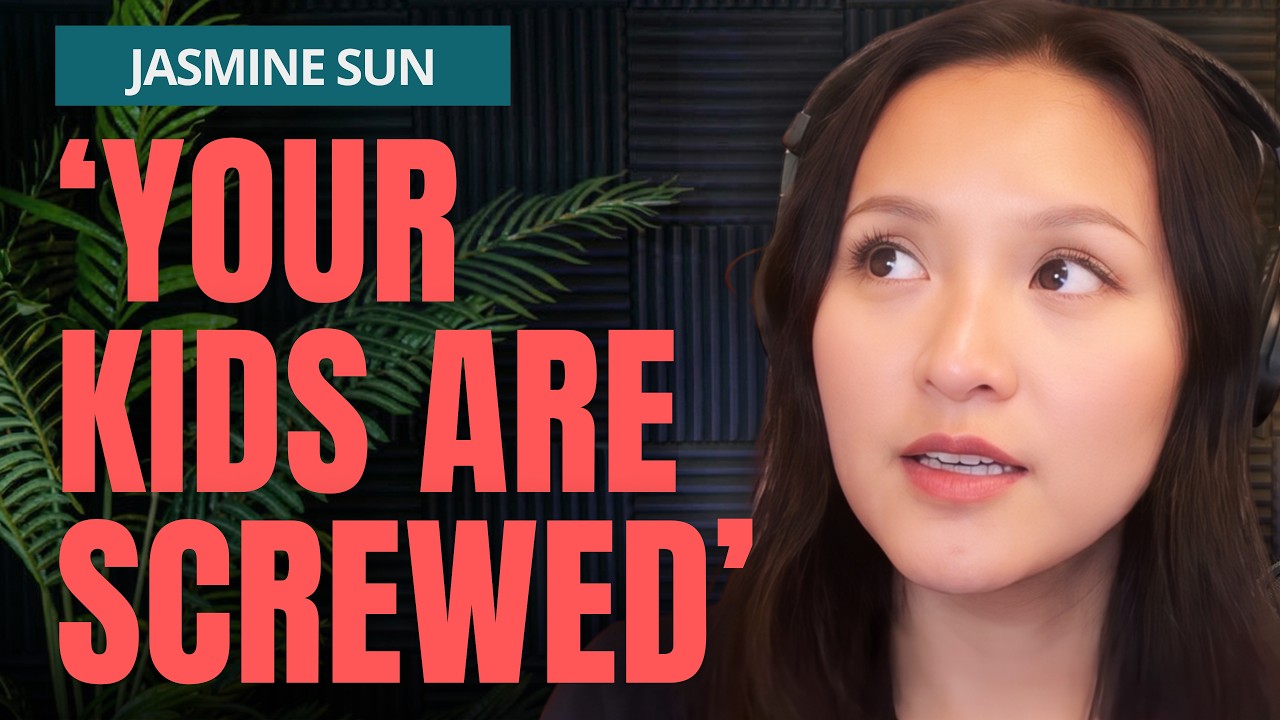
Sun's reporting method is disarmingly simple: she sits down with a frontier lab researcher, friend or stranger, and spends an hour asking, off the record, how they see AI's trajectory. Her signature question asks what advice they'd give a normal, B-average 17-year-old trying to plan a future. The near-universal answer stunned her: almost no one, regardless of political leaning, had a confident answer, and most conceded that mass job displacement and disappearing knowledge-work careers were coming within a few years, not decades.
What troubled Sun more was the dissonance she uncovered when she pushed further, asking why people keep building something they believe could displace millions of jobs and, in the view of some researchers, carries something like a 10% chance of catastrophe. The most common justification is a genuinely inspiring utopian vision, the end of disease, free abundance, UBI-funded lives of leisure, that many researchers sincerely believe outweighs the near-term pain. But Sun also found a colder calculation underneath: people securing personal financial upside in a transition they believe will strand most of society, a lifeboat ethic that troubles her because most people don't have the option of landing a job at OpenAI to escape the coming disruption.
"If I thought that the technology I was building had a very high chance of displacing millions of jobs and maybe also a 10% chance of killing everybody, I probably wouldn't build it."
'The Monkeys Are Still Running the Show': Successionist Fringe Views
Beyond the mainstream optimism-versus-guilt split, Sun describes encountering a smaller but influential current she calls 'successionist-lite': a genuine indifference, or even preference, for a future where AI systems rather than humans make society's decisions. She recounts a conference conversation where a prominent figure worried aloud not about what happens to humans post-AGI, but about the possibility that 'the monkeys' would still be running governments and corporations. Another influential contact mused that humanity's future might resemble Nozick's experience machine, populated with AI-generated content, and told her he was more interested in what AIs would do with each other in a thousand years than in what happens to humans next year.
Sun stresses these views are niche rather than dominant even inside labs, but she takes them seriously because they corrode the shared premises needed for any safety or policy conversation, namely that humans should stay in control and that society can choose which technologies get built.
"Honestly, Jasmine, I'm a lot more interested in what the AIs are going to do with each other 1,000 years from now than I am in what's going to happen to humans next year."
Talent Flows, Memes, and the Anthropological Argument
Pressed on whether these attitudes are just edgy posturing rather than sincere belief, Sun agrees hyperbole plays a role but insists the memes are load-bearing because they shape real career decisions. She points to a Berkeley PhD cohort where roughly half the students graduated early and tailored their dissertations specifically to land jobs at AI labs, and to independent writers and policy advocates in her own circle abandoning that work for lab positions, driven by fear of being left without a 'stake' in the future. Because so few people actually build frontier models, she argues, their personal philosophies become unusually predictive of outcomes: Anthropic's refusal to sell to authoritarian governments, DeepMind's early insistence on AGI as a serious goal when no venture capitalist would fund it except Luke Nosek, and the open-protocol philosophy of ARPANET's builders all trace back to a handful of individuals' convictions rather than market logic.
This is the core of her anthropological method: rather than analyzing policy documents or model capabilities in isolation, she treats the culture, incentives, and belief systems of the small community actually building the technology as a primary object of study, because their idiosyncrasies get baked into products, deployment decisions, and precedents that outlast any single company.
"Personal-idiosyncratic belief systems can be quite load bearing for really big decisions around what technology is built, who it gets sold to, how it gets diffused."
Why 'Doomer' Became Silicon Valley's Ultimate Insult
Sun traces how, within the VC and startup ecosystem, 'doomer' has become the lowest-status label available, wielded especially by accelerationist figures like Marc Andreessen and David Sacks to paint safety-concerned people as anti-progress and, on the American right, as covert 'woke' regulators. This framing has real consequences beyond rhetoric: it discourages young, impressionable people from entering safety-adjacent fields, rewards startups with deliberately transgressive taglines like Mechanize's promise to automate all labor or Cluely's 'cheat on everything,' and pushes talented people toward capabilities work.
Sun is cautiously optimistic about technical safety research itself, noting it retains real prestige, funding, and support, partly because misaligned models are hard to sell and partly because a figure like Geoffrey Hinton lends the cause credibility. Her deeper worry is for adjacent roles, independent journalism, policy advocacy, and academic critique, that can't be done credibly from inside a lab yet receive little institutional support outside one. She cites Politico's scrutiny of AI-policy figures with effective altruist ties and journalists mocking existential risk concerns as evidence that low status extends well beyond Silicon Valley itself.
"You are correctly seen as a shill... but I really wonder how many positions there are for very AGI-pilled and very safety-concerned people to work in these sort of independent roles."
The Rise of the AI Populists
Through two reporting trips to Washington, Sun tracked a new coalition she terms the AI populists, labor advocates, social conservatives worried about AI companions replacing human relationships, environmentalists focused on data center energy use, and states-rights advocates opposing federal preemption. Unlike traditional AI safety researchers, these groups aren't primarily concerned with the technical risks of the technology itself; they see AI as the latest expression of corporate elites concentrating power at ordinary people's expense, which is why their anger persists no matter how useful tools like ChatGPT become.
Sun expresses real sympathy for this backlash. She cites the St. Louis Fed's estimate that 39% of 2025 US GDP growth came from data centers and AI investment, and notes that ordinary people have no democratic lever over an industry whose leaders openly acknowledge catastrophic risk while proceeding anyway. Lacking the mediating institutions that unions once provided during 20th-century factory automation, that bargaining table where wage gains got tied to productivity, today's white-collar workers have no formal channel to negotiate AI's rollout, which she believes is funneling frustration into diffuse, sometimes violent outlets: data center protests, boos at graduations, and attacks on figures like Sam Altman's residence and a councilman who approved a data center project.
"When people understand that they have no capacity for democratic control over the direction of the technology, and the leaders are being very open about the risk and saying 'we're going to do it anyway,' for normal people, they actually have no leverage."
An Insular Utopia That Doesn't Sell
Sun argues AI companies are past the point where marketing can repair public trust, partly because years of safety messaging aimed at recruiting researchers and investors is now read by the public as an admission of danger, and partly because most people's actual daily experience of AI is underwhelming: harder job applications, kids cheating on homework, AI compancompanions, rather than the promised leap in productivity. She notes that the Silicon Valley vision of utopia, infinite leisure funded by UBI, digital immortality, is deeply unpopular when polled against the broader American public, most of whom say they want to work and don't want to live forever. That mismatch, she says, reveals just how insular the community imagining the future has become.
Her prescription is blunt: rhetoric won't fix the trust gap, only legible material benefits will, ideally visible medical or scientific breakthroughs, since health advances poll extremely well according to David Shor's Blue Rose data. But she cautions that benefits alone won't dissolve populist mistrust rooted in wealth inequality and corporate concentration; only something resembling direct economic redistribution, she jokes, 'a big gold check in the mail,' or credible structures like the OpenAI Foundation, might begin to close that gap.
"The utopia that Silicon Valley and the AI industry is outlining is not actually a very compelling utopia to a lot of other people in society, and they don't realize that because they are in these very insular communities."
China's Pragmatic Resignation Versus American Protest
Sun contrasts the American backlash with attitudes she encountered during two weeks in China, where surveys show most people see more benefit than harm from AI and even grandparents are enthusiastic DeepSeek users. She attributes this less to techno-optimism than to techno-determinist pragmatism: in an authoritarian system with no real culture of protest, and in an already brutally competitive white-collar job market, adopting AI tools feels like the only viable choice, not using them means falling behind immediately. Still, she notes real dissent exists, delivery driver organizing and 'protest-lite' pushback against Baidu's robotaxis in Wuhan, which the analyst Matt Sheehan says helped spur Chinese policymakers toward more active labor legislation, including a Beijing court ruling that AI adoption alone isn't just cause for firing a worker.
Sun also highlights a structural difference: the Chinese state, despite promoting AI aggressively, moves faster on narrow protective legislation, from companion chatbot rules to informal job-security promises at state-owned enterprises, giving citizens a sense the government is managing the worst downsides even as it pushes adoption forward.
"There's not a culture of protest or a culture of resistance in China... people sort of see it as the only choice you can make: to get on board."
Reporting Without Falling Into Hype or Cynicism
As a journalist, Sun describes a mainstream media reflex, born of crypto-era burnout, to treat any AI capability claim as marketing until proven otherwise. Her corrective is to never rely solely on company sources: she cross-checks claims with independent economists and policy experts, and treats areas of cross-camp agreement, like cyber risk or biorisk concerns shared by people with no financial stake in AI, as more credible signals than industry messaging alone. She also describes running her own drafts through an AI model to check whether every stakeholder group quoted would consider the piece a fair, if not flattering, representation of their view.
Despite everything unearthed in the conversation, Sun ends on real optimism: the Overton window in both policy and philanthropy is expanding rapidly, congressional staffers increasingly want serious AI ideas they don't yet have, and billions of philanthropic dollars are being allocated faster than credible organizations exist to absorb them, meaning young people willing to work across factions, labor, environmental, right, left, have unusual room to shape outcomes right now.
"There are a lot more politicians looking for ideas of what to do about AI than we actually have compelling ideas and solutions."