Ten Billion Euros and the Illusion of a Real Race
Eli opens with the Reuters headline announcing that the EU aims to fund seven AI gigafactories for 10 billion euros, framing it immediately as a story about Europe pretending to be a peer competitor to the United States and China. He argues that in the current AI arms race, the size of national investment is the real signal of seriousness, and that Europe's number simply does not clear the bar. To make the stakes concrete, he walks through hardware costs: a single Nvidia GPU runs about 40,000 dollars, a full Nvidia server around 200,000 dollars, and a complete server rack can reach roughly 10 million dollars, meaning that a headline figure like 11.5 billion dollars sounds large only until it is measured against what modern AI infrastructure actually costs.
He sharpens the comparison with a domestic reference point: the NSA's data center built in Nevada about fifteen years ago cost 8 billion dollars for the facility alone, before any operational or intelligence-gathering costs were added. Stacking that older, single-site figure against the EU's newer plan to fund seven separate gigafactories makes the European number look even thinner. Even factoring in the EU's hoped-for 20 billion euros in private investment, bringing the total to roughly 30 billion euros spread across seven sites, Eli remains skeptical that this comes close to what a serious 'gigafactory' would require, and he invites listeners to weigh in on whether the funding is remotely adequate.
"11.5 billion dollars barely gets you to play at the table."
Factories, Data Centers, and the Power of Rebranding
A recurring thread in the episode is Eli's irritation at the industry's habit of renaming infrastructure to make it sound more palatable. He points out that these EU projects are, in plain terms, data centers, not factories, but that calling them 'AI factories' or now 'AI gigafactories' manufactures public enthusiasm that a plain data center announcement would never generate. He credits Nvidia CEO Jensen Huang with popularizing 'AI factory' language in the US, and notes that Europe has now leapfrogged that branding entirely by jumping straight to 'gigafactory,' a term he says sounds impressive while meaning essentially nothing extra in technical terms.
He frames this linguistic escalation as symptomatic of how the AI industry sells itself when the underlying technology struggles to prove its value on its own merits. If people are already suspicious of 'another AI data center,' the fix isn't better justification, it's better packaging. For Eli, the EU adopting this same rhetorical trick, and outdoing Silicon Valley's own hype language, is both darkly funny and revealing of how much of this announcement is optics rather than substance.
"Nobody wants another effing AI data center. Why do we need another AI data center, right? You get a lot of pushback. But if you call it an AI factory..."
The Marathon Metaphor: Running in a Race Nobody Thinks You're Winning
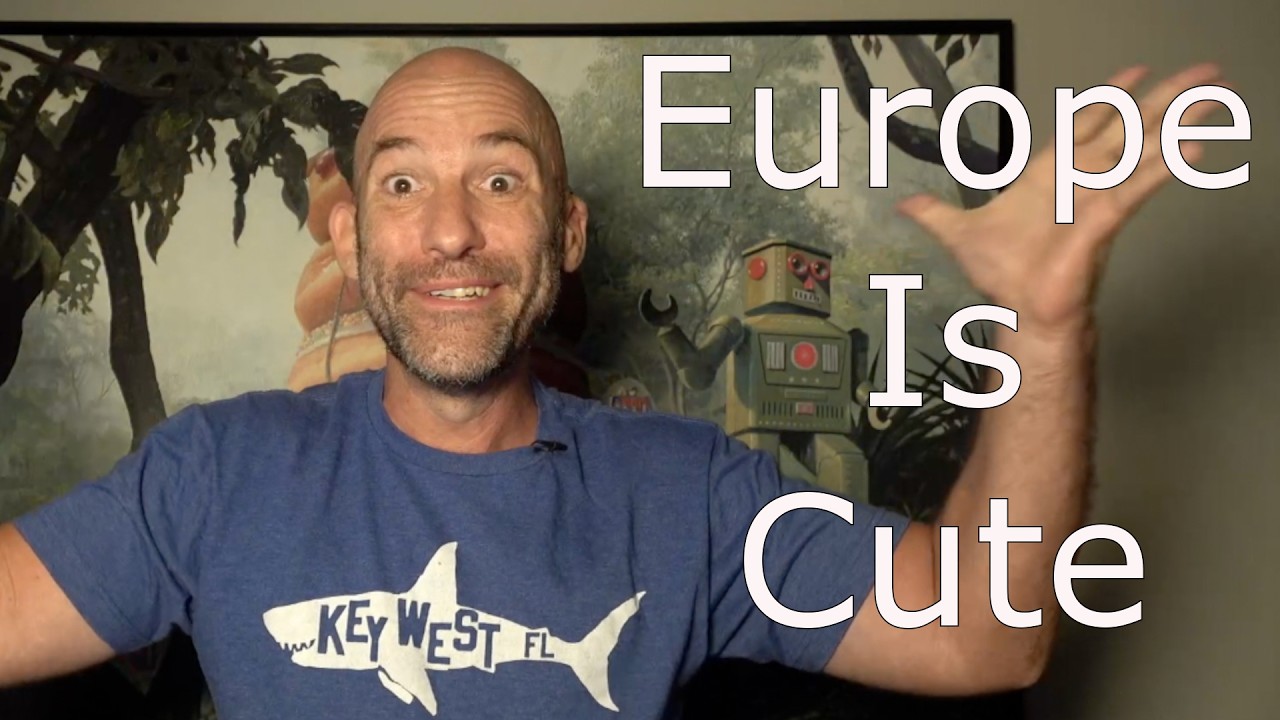
To capture how he sees Europe's position relative to the US and China, Eli tells an extended, self-deprecating story about entering local running races in Asheville, where he gets lapped by nine-year-olds and passed by a woman decades older than him who sounds like she is about to collapse yet still beats him by a quarter mile. He uses this as a direct analogy for Europe's AI ambitions: technically present at the starting line, technically 'competing,' but not remotely regarded as a real contender by anyone watching. The bit is played for laughs, but it does real argumentative work, reinforcing his core claim that participation and competitiveness are not the same thing.
He returns to this image later in the episode, describing his own huffing, out-of-breath race face as literally what Europe looks like when it announces initiatives like this gigafactory plan. The humor underscores a serious point: showing up with a press release and a modest budget does not change the underlying gap in resources, talent, and infrastructure between Europe and the two dominant AI powers.
"I may run in races, but nobody believes I'm competitive when I do."
A Former Europhile's Case Against Modern Europe
Midway through, Eli pivots from mockery to something closer to lament, explaining that he used to genuinely believe in a strong Europe and still thinks the United States would benefit from a robust European counterbalance, one built on shared democratic and capitalistic values that could occasionally push back against American excess. That belief is precisely why he says he gets so worked up watching what he views as Europe's chronic pattern of bold announcements followed by inadequate follow-through. He extends this critique beyond AI to NATO and European infrastructure, citing a study from Donald Trump's first administration finding that roughly 90 percent of European roads could not support heavy military transport, meaning tanks like the American Abrams or German armored vehicles could not even be moved efficiently across the continent in the event of a war with Russia.
He uses this infrastructure failure as evidence that Europe's rhetoric about self-sufficiency and strategic ambition, whether in defense or in technology, consistently outpaces its willingness to actually fund what it claims to prioritize. The AI gigafactory announcement becomes, in this framing, just another example in a long pattern, a headline-grabbing commitment that looks good only because it's being compared to the low bar of doing nothing at all.
"If Europe was actually strong, it would be so useful for us because we could have a counterbalance that was very close to our mental thought process about how the world works."
Nineteen Existing Sites and an Open Question for Listeners
Eli notes a detail from the Reuters piece that the seven new gigafactories would come on top of 19 existing AI factories already operating across EU countries, and that the plan grew from an original five sites to seven due to strong interest from member states. He reads this expansion skeptically, joking that if interest is that strong, everyone should simply get a gigafactory, implying the growth in project count may be more about political appeasement among EU nations than a coherent strategic buildout. He also quotes EU tech chief Henna Virkkunen's statement that access to raw computing power is a 'strategic necessity' for Europe, framing it as exactly the kind of confident language that historically has not been matched by proportional funding.
He closes the episode by directly posing his central questions to the audience: whether renaming data centers as gigafactories means anything technically, whether 10 billion euros in public funding plus a hoped-for 20 billion in private investment is remotely sufficient, and whether Europe's overall posture represents a real effort to compete or a performance of competing. He signs off inviting comments, and pointing listeners to the show's presence on Spotify, Apple Podcasts, and his LinkedIn.
"Access to the raw scale of computer power within AI gigafactories is a strategic necessity for Europe as AI development accelerates."